What Are Ceramides and Why Does Your Skin Need More of Them?
If your skin feels dry, tight, or reactive even when you're using moisturizer, the problem might not be hydration. It might be your skin barrier. And at the center of a healthy skin barrier are ceramides.
What Ceramides Actually Are
Ceramides are lipid molecules that make up roughly 50% of the outermost layer of your skin. Structurally, each ceramide consists of a long-chain sphingoid base linked to a fatty acid. This unique structure allows them to form a protective layer that reduces moisture loss and shields skin from environmental damage.
Think of your skin barrier like a brick wall: skin cells are the bricks, and ceramides are the mortar holding them together. When ceramide levels are healthy, that wall is tight and intact. Moisture stays in, irritants and pollution stay out, and skin looks plump and resilient. When ceramide levels decline, the mortar starts to crumble. Moisture escapes. Irritants get in. Skin becomes dry, dull, sensitive, and more prone to fine lines.
Researchers recognized the significance of ceramides in skincare when they discovered their crucial role in maintaining barrier function. Since then, ceramides have become one of the most well-studied and clinically validated ingredients in dermatology.
Why Ceramide Levels Decline With Age
You're born with a rich supply. By your 30s, ceramide production begins to slow. By your 50s, ceramide levels in the skin can be less than half of what they were in your 20s. This isn't just about dryness. It's one of the primary reasons mature skin becomes thinner, more sensitive, and slower to recover from irritation.
Several factors accelerate this decline beyond natural aging: UV exposure, harsh cleansers, over-exfoliation, cold weather, and chronic inflammation all deplete ceramide reserves faster than the skin can replenish them.
This is why ceramide replenishment is such a central focus of Japanese skincare. Where many Western anti-aging products target the visible symptoms of aging, J-beauty addresses the underlying structural decline that makes those symptoms appear in the first place.
The Different Types of Ceramides
Not all ceramides perform the same function. Skincare formulations typically use several types, each with a distinct role:
Ceramide 1 (EOP) supports overall skin barrier function and is one of the most abundant ceramides in healthy skin. Ceramide 2 (NS) is the primary ceramide responsible for moisture retention. Ceramide 3 (NP) helps reduce skin irritation and is particularly beneficial for sensitive skin. Ceramide 6-II (AP) aids in skin renewal and supports gentle exfoliation at the cellular level. Ceramide 9 provides overall skin resilience and is found in the outermost layers of the epidermis.
The most effective ceramide skincare products use multiple types together rather than relying on a single variety, because healthy skin barrier function depends on the balance between all of them.
Where Ceramides in Skincare Come From
Ceramides used in skincare products are derived from three main sources. Animal-derived ceramides come from bovine tissue and have a close structural match to human skin ceramides, though they are less common in modern formulations. Plant-derived ceramides, called phytoceramides, are extracted from grains like wheat, rice, and soy, as well as sweet potatoes and other plant sources. These are common in vegan skincare formulations. Synthetic ceramides are lab-engineered to replicate the structure of natural ceramides exactly, and tend to offer high stability and bioavailability.
A fourth approach, and the one most relevant to Japanese skincare, is fermentation-derived ceramides. Seiso JBeauty's patented ceramide complex is derived from Japanese Koji, the same fermented culture behind sake and miso. The fermentation process produces ceramides with over 20 long-chain varieties that closely mirror the ceramides naturally found in human skin. This structural similarity means they integrate into the skin's lipid network rather than simply coating the surface, rebuilding the barrier at a functional level that synthetic ceramides typically don't reach.
What Ceramides Do For Your Skin
When your skin's ceramide levels are properly maintained, the effects are broad and interconnected rather than limited to a single benefit.
Barrier strengthening is the foundational effect. Ceramides reinforce the stratum corneum, the outermost skin layer, reducing transepidermal water loss (TEWL) and improving the skin's ability to regulate moisture without external help.
Moisture retention improves significantly because ceramides act as the structural "mortar" that prevents hydration from evaporating throughout the day. This is why ceramide products tend to produce lasting softness rather than the temporary plumpness you get from humectants alone.
Sensitivity and reactivity decrease as the barrier strengthens. A compromised barrier allows irritants, pollutants, and allergens to penetrate more easily, triggering inflammation. Restoring ceramide levels reduces this permeability and calms chronically reactive skin over time.
Anti-aging benefits follow from barrier repair rather than acting directly on fine lines. Many wrinkles in mature skin are caused or worsened by moisture loss and barrier compromise, not just collagen decline. Ceramides address this by improving the skin's structural integrity, which reduces the appearance of lines that deepen when skin is dry and poorly supported.
For acne-prone skin, ceramides help maintain balanced sebum production. A compromised barrier often triggers the skin to overproduce oil as a compensatory response. Restoring the barrier can reduce this cycle.
Ceramides and the Japanese Skincare Approach
Ceramides function by creating a "mortar" between the skin cells, which acts like glue to lock in hydration. Without sufficient ceramides, the skin can become dry, irritated, and prone to damage.
How to Add Ceramides to Your Routine
Ceramides work at every step of a routine, but they're most effective in leave-on products where they have time to integrate with the skin's lipid network. They pair particularly well with hyaluronic acid, which draws moisture into the skin that ceramides then help retain. Niacinamide supports barrier function from a different angle and compounds well with ceramides for sensitive or redness-prone skin. Peptides, which stimulate collagen and elastin production, complement ceramides' structural barrier work for a more complete anti-aging approach.
For a complete ceramide routine using Seiso JBeauty's ceramide line:
Start with the Seiso Fuwafuwa Foam Cleanser, formulated to cleanse without stripping the lipid barrier that ceramides maintain.
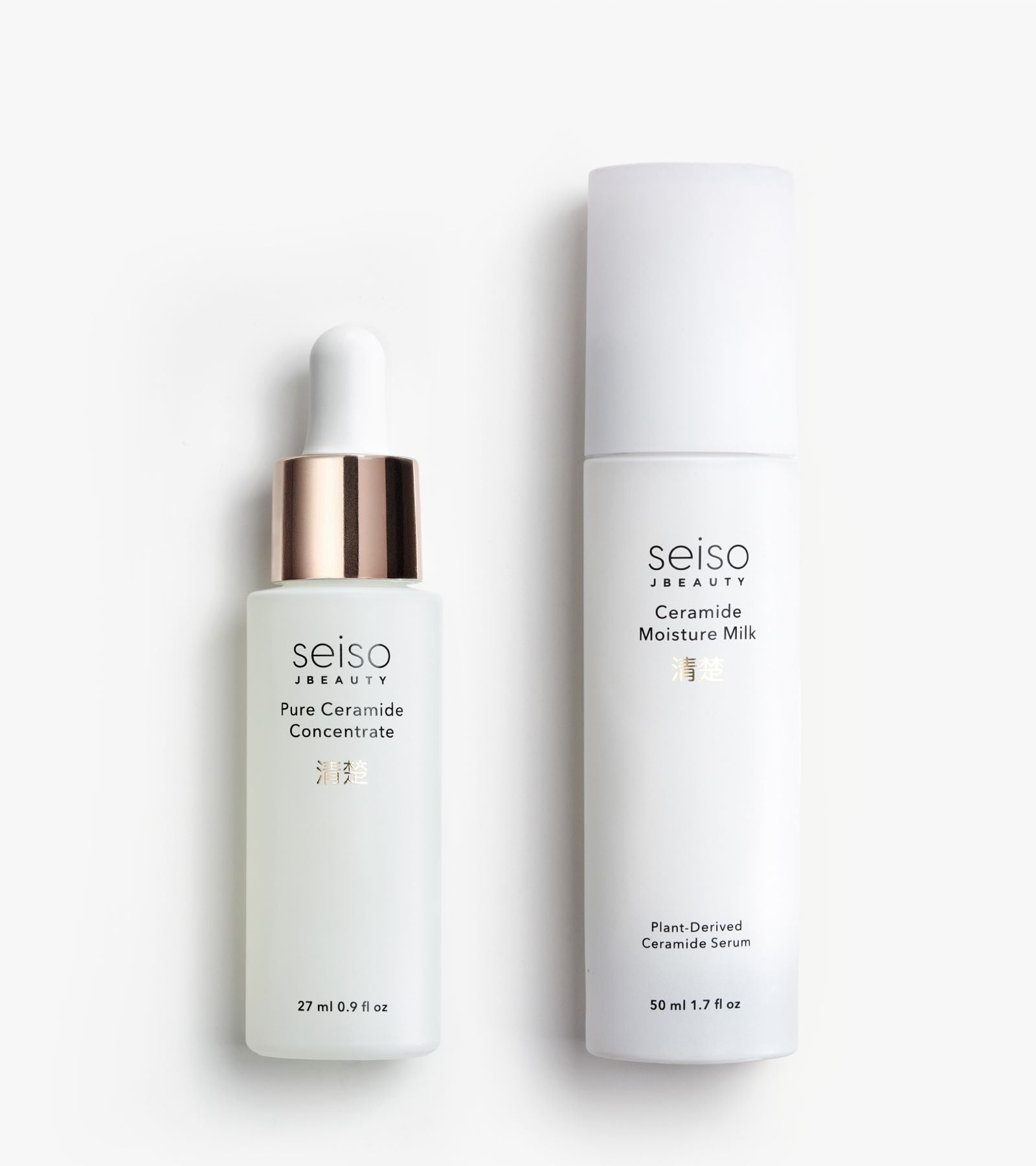
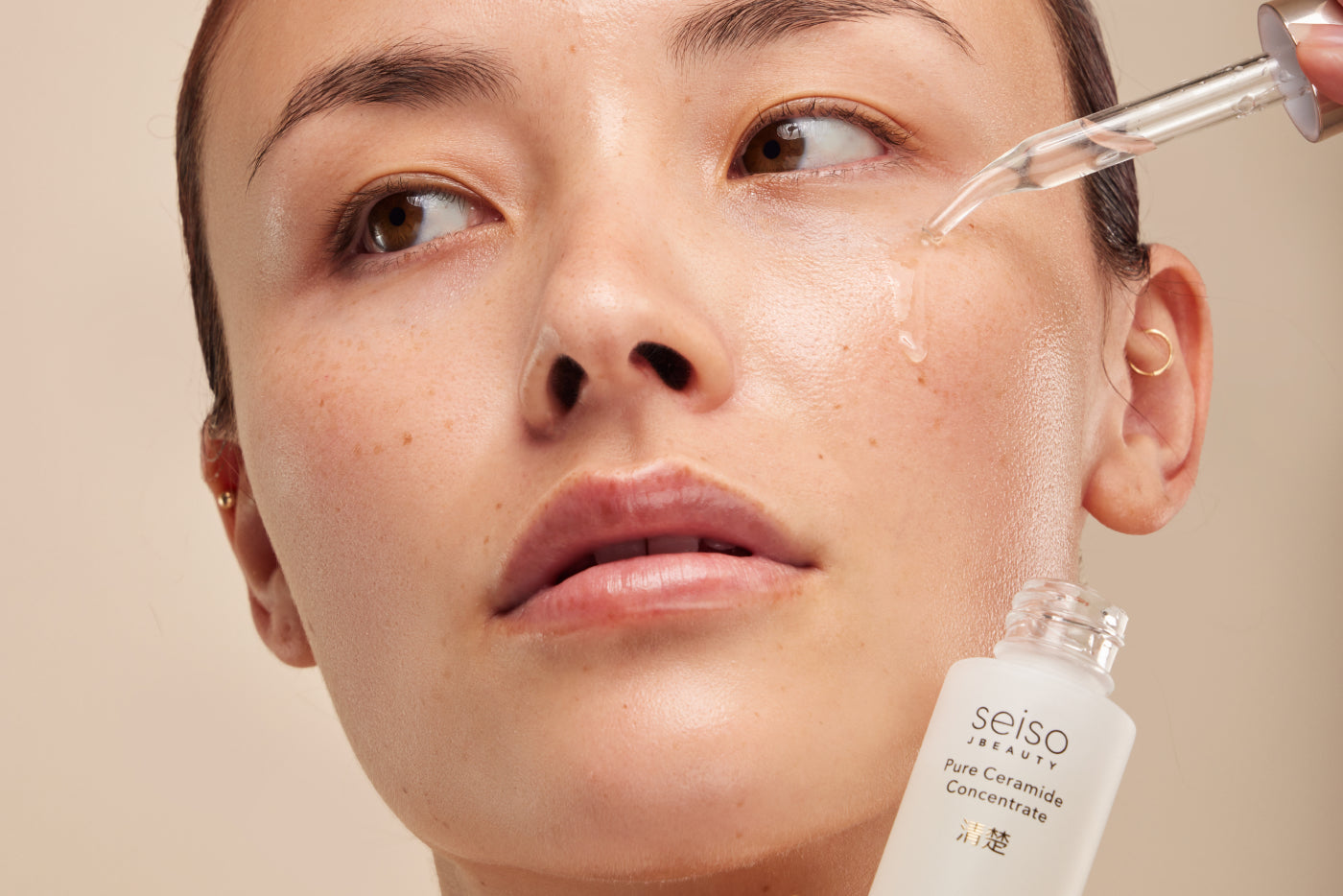
Apply the Seiso Pure Ceramide Concentrate as your treatment step. Three to five drops in a nano-emulsion format allows rapid penetration before the next layer is applied.
Follow with the Seiso Ceramide Moisture Milk, which delivers the full Koji-derived ceramide complex in a lightweight, layerable texture. Use it morning and evening for consistent barrier rebuilding.
Finish with the Seiso Ceramide Water Velvet Cream to seal in everything underneath. Two molecular weights of hyaluronic acid work in tandem with the ceramides to hold moisture at both surface and deeper skin levels.
Are Ceramides Safe for All Skin Types?
Yes. Ceramides are non-comedogenic and well-tolerated across all skin types, including sensitive, acne-prone, and mature skin. Because they're identical or near-identical in structure to what the skin naturally produces, adverse reactions are rare. Some formulations combine ceramides with additional active ingredients that may cause sensitivity in certain skin types, so patch testing any new product is always a sensible precaution.
Ceramide products can generally be used daily. There is no risk of over-applying in the way that exists with exfoliants or retinoids.
How Long Does It Take to See Results?
Because ceramides work by rebuilding the skin barrier rather than applying a topical coating, results come gradually and compound over time. Most people notice softer, more comfortable skin within one to two weeks. Meaningful improvement in fine lines, texture, and sensitivity typically requires four to eight weeks of consistent daily use. This timeline is consistent with the Japanese skincare philosophy of treating skin health as a long-term practice rather than a quick fix, and with the biology of skin barrier repair, which operates on the same cycle as skin cell turnover.
Ceramide-Rich Foods That Support Skin Health
Topical ceramides work from the outside in, but diet also plays a supporting role. Foods naturally high in ceramide precursors include brown rice, sweet potatoes, soybeans, wheat germ, and dairy products. While dietary ceramides alone are not sufficient to address a compromised skin barrier, they support overall skin lipid health as part of a broader approach.
Explore the full Seiso JBeauty ceramide collection